 Volunteering with Freepackers
 Français
 English
 Español




















 Indonesia, from €7,645




Key points
- Requirements depend on your education level, your field of study and the host country's regulations.
- Pre-med and undergraduate interns mainly observe, with no independent patient care or clinical decision-making.
- Even graduates cannot practise independently without a local licence.
- Most internships require a budget beyond the programme fee, for travel, living expenses and personal spending.
Medical internships abroad let students and recent graduates apply their theoretical knowledge in real healthcare settings while gaining a global perspective. They are open to students and graduates in medicine, nursing, dentistry, physical therapy, public health and traditional medicine. Interns observe and support healthcare professionals in hospitals, clinics and community health centres, with tasks that depend on their education level and on the host country's rules.
Why do a medical internship abroad
- International clinical exposure: observing and supporting healthcare professionals in hospitals, clinics and community health centres.
- Professional skills: communication, adaptability, teamwork and ethical awareness in medical settings.
- Understanding healthcare systems: learning how public and private healthcare systems work around the world.
- Career advantage: strengthening medical school or healthcare job applications with supervised international experience.
- Cultural competence: working with diverse patient populations and medical teams.
Challenges to consider
- Practice: the scope of practice is limited, depending on your education level and the country's regulations.
- Communication: cultural and language barriers.
- Budget: travel and living expenses need financial planning.
Requirements for medical internships abroad
Requirements vary with education level, field of study and host country regulations. Programmes are structured to match the intern's academic training and to ensure ethical, supervised participation. At every level, applicants generally need:
- a relevant academic background in healthcare
- English language proficiency (local language skills are a plus)
- a CV
- a motivation or cover letter
- compliance with the host country's regulations and ethical standards
Pre-med and undergraduate students
These internships are for undergraduates in pre-med, biology, biomedical sciences, public health or related healthcare tracks who have completed at least 1 to 2 years of university coursework. Roles are mainly observational and educational, with no independent patient care or clinical decision-making. Typical responsibilities:
- shadowing doctors, nurses and healthcare staff
- observing consultations, procedures and hospital workflows
- assisting with non-clinical tasks (patient flow, basic administrative support)
- taking part in health education or community outreach programmes
Nursing students
These internships are designed for nursing students (ADN, BSN or equivalent) who have completed their foundational coursework and early clinical rotations. Interns provide supervised patient care, with duties set by their training level and local healthcare regulations. Typical responsibilities:
- taking vital signs and monitoring patients
- assisting with hygiene, mobility and daily patient care
- supporting medication preparation or administration (observation or assistance only)
- assisting nurses during ward rounds and clinical routines
Medical students
These internships are designed for medical students who have completed their pre-clinical training. They offer supervised observational exposure with limited assistance and no independent clinical decision-making. Typical responsibilities:
- observing patient examinations and procedures
- assisting with patient intake, documentation and basic assessments, where permitted
- taking part in ward rounds and case discussions
Final-year medical students and graduates
These internships offer enhanced observational opportunities under supervision, without independent clinical responsibilities. Interns assist healthcare professionals with clinical workflows, observe advanced procedures and support public health or preventive care initiatives. Even for graduates, independent clinical practice is not permitted without a local licence.
Choosing a healthcare setting
Healthcare internships abroad span hospitals and clinics, community health programmes, public health outreach, medical research, nursing placements, mental health services and rehabilitation centres. The right choice depends on whether you want hands-on clinical experience, patient interaction, research exposure or a broader public health perspective, in line with your career goals.
Government programmes
These internships often take place in large public hospitals or clinics, where interns assist with patient care, follow health protocols and support public health initiatives. They offer structured training and exposure to national health systems and policies.
NGOs and community-based programmes
Internships with NGOs usually take place in smaller community clinics or mobile health units, where interns help with services ranging from basic care to health education. They often focus on underserved populations and offer a more flexible, hands-on experience.
Rural or urban internships
- Urban internships: large hospitals, advanced medical technology, specialised departments.
- Rural internships: smaller clinics, broader responsibilities, community-based care, limited resources.
How to apply and fund a medical internship abroad
Applying comes down to three steps: reach out to organisations, check that you meet the requirements, and plan your funding.
Most internships require a budget beyond the programme fee. With RealStep, the registration fee covers key essentials such as weekday breakfast and lunch, accommodation and airport pickup; longer stays cost more, and you should plan extra for personal spending money. Grants and other options are covered in our guide to funding your project abroad.
Popular medical internship destinations
- India: a top choice thanks to its diverse healthcare settings, from high-tech hospitals to rural clinics, with a wide range of experiences and medical cases.
- South Africa: a combination of advanced medical facilities and underserved communities, giving interns a broad perspective on healthcare disparities and solutions.
- Thailand: a mix of modern hospitals and traditional practices, with the chance to work in vibrant, diverse communities.
- Spain: training in Europe's well-structured healthcare system and learning European healthcare practices.
- Sri Lanka: experience in both urban hospitals and rural clinics, with an emphasis on public health initiatives and community care.
RealStep medical internship programmes
Rural clinic internship in the Philippines
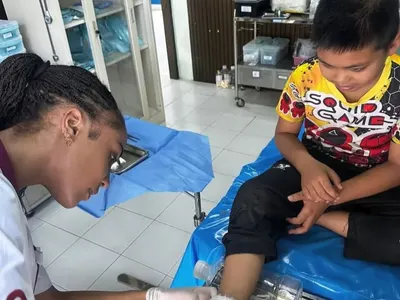
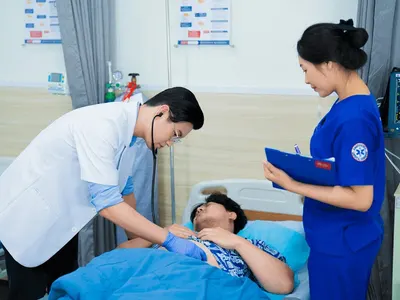
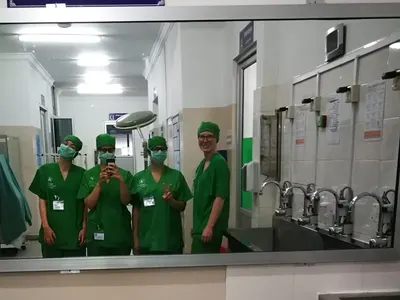
The nursing and medical internship in the Philippines supports understaffed rural clinics in the Tacloban region. Tasks are adapted to each intern's qualifications and include medical assessments, assisting in minor surgery and taking part in health outreach programmes.
Nursing internship in Thailand
The nursing internship at a health centre in Thailand places participants in a clinic where they support patient care, carry out home visits and lead hygiene and prevention workshops. Focused on strengthening healthcare in under-resourced communities, interns work with local medical staff on conditions ranging from diabetes to agriculture-related injuries.
Medical internship in Bali, Indonesia
The medical internship in Bali combines two experiences: health education and prevention workshops in rural schools around Ubud, and hands-on assistance in local hospitals and in villages with access to medical care.
Other medical placements
RealStep also offers nursing internships in Cape Verde (Tarrafal) and in Chiang Mai, Thailand, a medical and nursing internship in Tangier, Morocco, and physiotherapy internships in Moshi, Tanzania, and Córdoba, Argentina. Discover all our nursing and medical internships abroad.
Frequently asked questions
Are internships abroad good for med school?
Yes. A medical internship abroad can strengthen a med school application by showing clinical exposure, cultural competence, adaptability and commitment to healthcare. The key is to choose a programme where you observe ethically, learn from professionals and can clearly explain what you gained from the experience.
How do I apply for a medical internship abroad?
Start by choosing a programme that matches your education level and interests. Then prepare your CV, motivation letter and any required documents, such as transcripts, a background check and vaccinations. Apply early, confirm the visa requirements, and budget for programme fees, flights and insurance.
Is it better to intern or volunteer abroad as a pre-med student?
It depends on your goals. Internships are usually more structured and clinically focused, which can be more relevant for med school, while volunteering often emphasises community support and outreach. For pre-med students, internships usually provide more medically related experience.
What are the top countries for medical internships in Europe?
Spain combines clinical training with cultural immersion. Germany offers high healthcare standards and research opportunities. The UK has world-renowned hospitals and diverse patient care.
Can I do a medical internship in Canada?
Canada is a good choice for an internship in many medical fields, thanks to its advanced healthcare system and diverse patient population. RealStep does not currently offer medical internships there, but runs medical programmes in more than 10 other countries.
 Philippines