Traveling abroad for an internship offers the chance to explore new cultures while developing career skills. However, international travel also brings unfamiliar environments and challenges. By preparing ahead, understanding potential risks, and using helpful tools, interns can enjoy a safe and rewarding experience abroad.
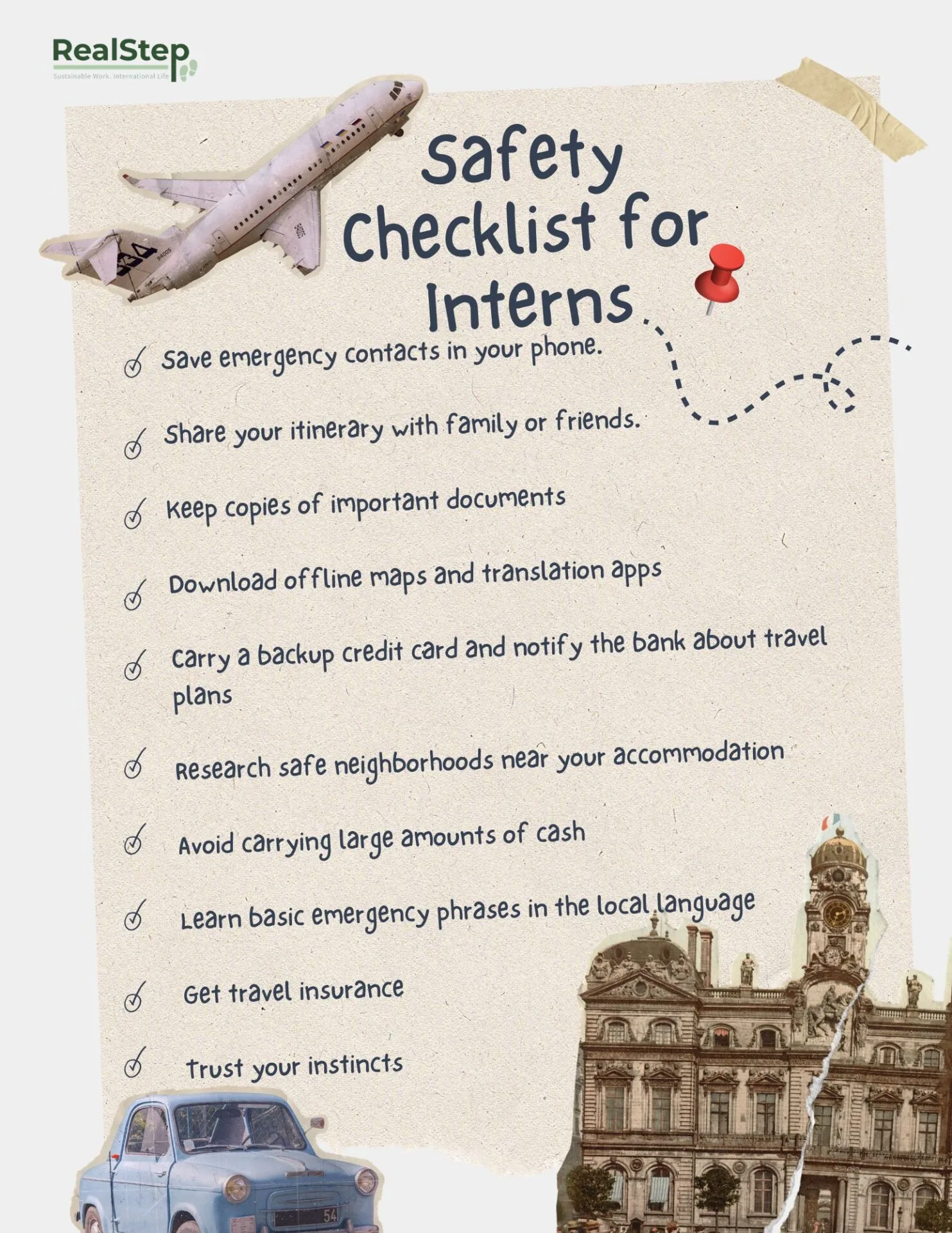
Before traveling, make digital copies of essential documents such as your passport, visa, internship confirmation, and travel insurance. Store them in secure cloud storage so they are accessible if the originals are lost or stolen. Even consider printing such documents and storing them in your accommodation in the event your phone or physical copies are lost or stolen.
Let a family member or trusted friend know your travel itinerary, accommodation address, and internship location. You can also use location-sharing apps to stay connected during your time abroad.
Create a document with all your important travel and internship details and share it with trusted family members or friends. Include information such as your accommodation address, internship location, contact numbers, flight details, and emergency contacts. Having this information easily accessible ensures that someone can assist you quickly if needed.
When traveling abroad for an internship, it is safer to rely on secure payment methods like credit cards or mobile payments rather than carrying large amounts of cash. Keep a small amount of local currency for emergencies, but store the rest of your money securely.
It’s also a good idea to notify your bank before international travel so your card transactions aren’t flagged or blocked while abroad.
Understanding the culture, transportation options, and local safety guidelines of your destination can help prevent issues once you arrive. Checking travel advisories from trusted sources like the U.S. The Department of State can help travelers stay informed about safety conditions.
Many governments allow citizens to register their international travel plans. This helps embassies contact travelers in case of emergencies, natural disasters, or political disruptions.
Before departing for your internship abroad, make sure your phone will work in your destination country. Check with your provider about international plans or consider purchasing a local SIM card or eSIM once you arrive.
Having reliable phone access will allow you to use navigation apps, contact your internship host, and reach emergency services if needed.
Several platforms provide reliable travel safety information and helpful tools.
Recommended resources include:
These resources can help interns stay informed and navigate unfamiliar destinations more confidently.
Major cities offer incredible opportunities, but also attract pickpockets in crowded areas like train/metro stations and tourist districts.
Use anti-theft bags and stay alert in busy public spaces. Avoid keeping valuables in your back pockets. Store them in front pockets instead. Don’t carry all your important items in one place; separate your cash, cards, and documents to reduce risk if something is lost or stolen. It’s also helpful to research common scams and pickpocketing hotspots at your destination so you know what to watch out for.
If your internship is located in a rural area, transportation options may be limited. Plan travel routes ahead of time and let someone know when traveling long distances. Share locations with family or friends.
Follow local health recommendations carefully. This may include drinking bottled water, avoiding unsafe foods, and checking vaccination guidelines before travel.
Before interns even leave their home country, RealStep provides personalized guidance to help them prepare for their experience.
This includes:
Upon arrival, interns are welcomed by local teams to help them adjust safely to their new environment.
Support typically includes:

Many programs also include:
Accommodation assistance:
Accommodation is carefully organized to prioritize both safety and convenience.
Interns can expect:
Depending on the destination, meals may be:
Emergency contacts and local staff:
RealStep programs include trained local staff with first aid knowledge, access to nearby doctors or private clinics, 24/7 emergency contact lines for immediate assistance, and on-site first aid equipment.
In case of an emergency, interns can rely on the local team for immediate support, while the RealStep team remains available during office hours for additional assistance, guidance, or personal concerns.
Both RealStep and Freepackers:
Because of this hands-on experience, the team can answer detailed questions from daily routines to accommodation setup, helping interns feel fully prepared and supported.

Enroll in STEP: Smart travel enrollment program - It is a free service that sends you email updates and alerts from U.S. embassies and consulates abroad.
GeoSure - Provides localized safety scores
bSafe - bSafe is a top-rated personal safety app for international travel. The app offers live GPS tracking, voice-activated emergency alarms, and automatic audio/video recording to a trusted, designated "guardian" network.
Look for a policy that includes:
It’s also important to check if the policy covers your specific destination and any activities included in your internship.
Finding safe and affordable housing is key to a positive internship experience. When searching for accommodation:
If possible, opt for housing arranged or recommended by your program provider.
Using trusted ride-sharing apps is one of the safest ways to get around in a new city, especially at night.
Recommended services include:
Always double-check the driver’s name, photo, and license plate before entering the vehicle, and avoid accepting rides from unofficial drivers.
Sharing your travel plans adds an extra layer of safety while abroad. Make sure to provide a trusted contact with:
Using apps like Life360 can allow real-time location sharing and quick check-ins throughout your trip.
Public transportation is often the most affordable way to get around, but it’s important to stay cautious:
Being aware of your surroundings can help prevent the most common travel issues.
Booking the right flight can save money and reduce stress if plans change. To find the best options: