"Green skills" is more than a buzz phrase. Green skills are, for starters, the skills you need in order to work in green jobs — conservation, renewables, environmental consulting, and more. But these skills are not important only for environmental or green jobs; they are increasingly important across all industries.
Green skills are the skills needed to support the transition to sustainability: a future where our economic and social systems work with nature rather than against it. They span technical expertise, critical thinking, and behavioural shifts — and they are quickly becoming a core part of what it means to be employable in the 21st century.
The green transition is reshaping the labour market faster than most people realise. Green skills are already becoming very valuable in finance, manufacturing, IT, construction, marketing, and more. According to LinkedIn's Global Green Skills Report, the share of job postings requiring at least one green skill has grown significantly year on year, across every major sector.
This matters for anyone entering the workforce — not just those planning a career in conservation or clean energy. Employers across industries are looking for people who understand sustainability, can think in systems, and know how to act responsibly in the face of environmental constraints.
In short, green skills are becoming a prerequisite for employability in the broadest sense.
Globally, industries are transitioning towards more environmentally sustainable production. This transition is also part of the UN Sustainable Development Goals (affordable and clean energy, sustainable cities and communities, and responsible production).

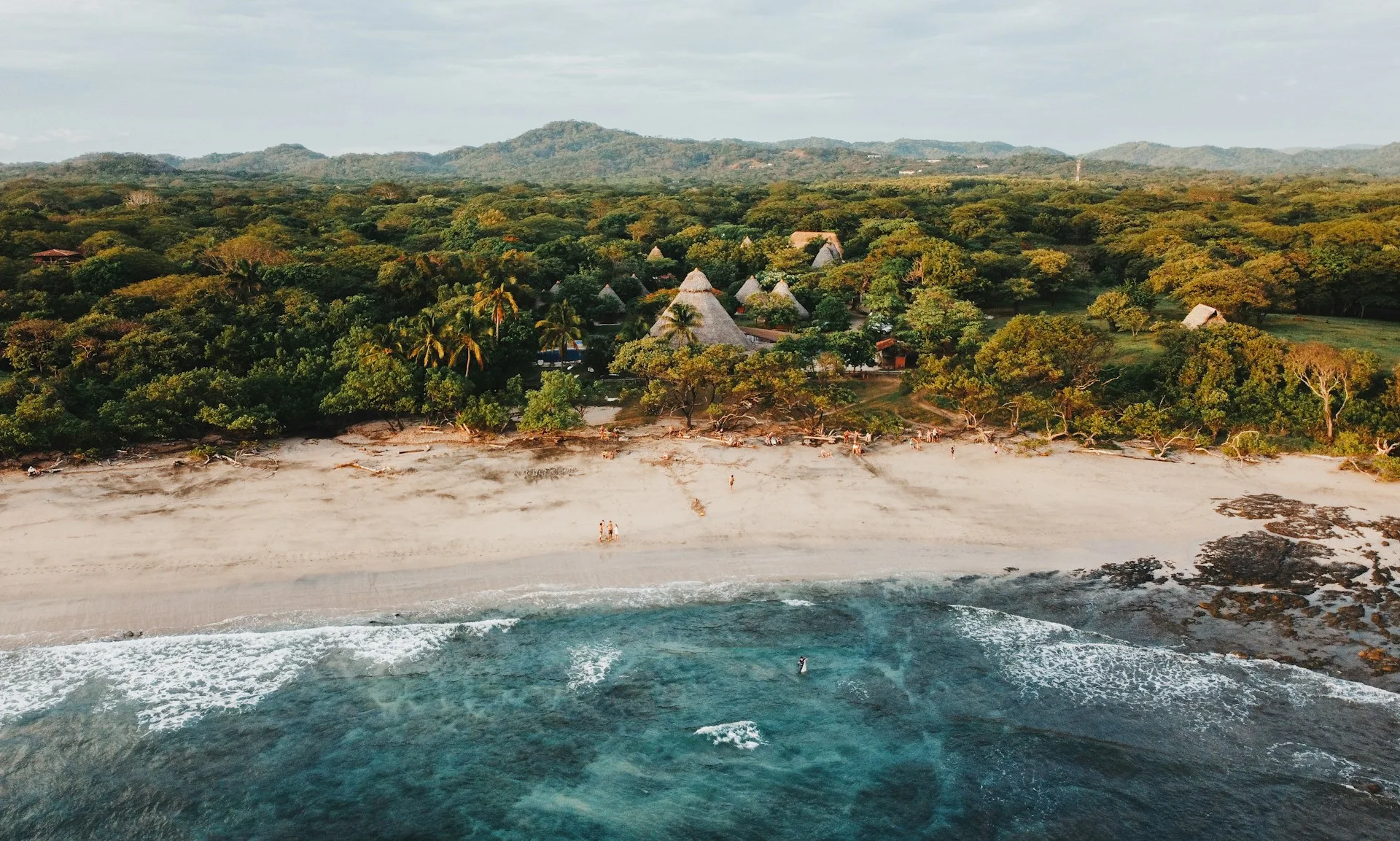
The following skills are consistently identified as the most valuable green skills by employers and researchers alike. To make them concrete, each one is illustrated with an example drawn from the Freepackers environmental volunteer programme at the Galápagos National Park — one of the most biodiverse and fragile ecosystems on the planet.
Some recent statistics about Green Skills :
Embracing our fundamental interdependence with the rest of nature, rather than seeing ourselves as separate from it. This includes helping others in your professional environment develop the same awareness.
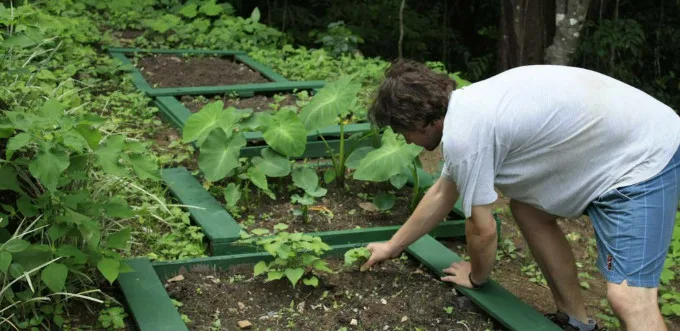
Why it matters for your career: Employers in sustainability, tourism, agriculture, urban planning, and many other fields need people who instinctively factor nature into their decisions — not as an afterthought, but as a starting point.
In practice at the Galápagos:
Volunteers spend weeks working directly alongside giant tortoises, sea turtles, and marine iguanas in one of the world's most protected ecosystems. Living and working in this environment — rather than simply visiting it — builds a visceral understanding of what ecological health looks like and what it costs to maintain. When a volunteer cares for hatchlings at the giant tortoise breeding centre, they are not just completing a task; they are developing an intuitive relationship with a species that has existed for millions of years and whose survival depends on human decisions made today.
An appreciation of the core scientific concepts underpinning environmental challenges — from ecosystems and biodiversity to climate systems and pollution cycles — and the ability to apply that understanding in a practical context.
Why it matters for your career: You do not need to be a scientist to need this skill. Marketers, project managers, architects, and financial analysts all increasingly need to understand scientific evidence in order to make responsible decisions and credibly communicate on sustainability topics.
In practice at the Galápagos:
The Galápagos Islands are under growing pressure from tourism. Understanding why certain visitor sites and trails are maintained in specific ways — how footfall affects native vegetation, how human presence near nesting sites can disrupt sea turtle behaviour — requires engaging with ecological science in a direct, applied way. Volunteers who work with park rangers quickly grasp the cause-and-effect logic that underpins conservation management, building scientific literacy through fieldwork rather than textbooks.
Specific technical and practical expertise that directly enables environmental conservation or the green transition. These can range from operating renewable energy systems to hands-on fieldwork.
Why it matters for your career: Hard green skills are in acute shortage across the economy. From insulation installers to biodiversity surveyors, there are not enough trained people to meet the demand the green transition requires.
In practice at the Galápagos:
Volunteers assist park rangers in the physical maintenance of visitor sites, trails, and protected areas using basic tools — shovels, hand tools, and equipment used in habitat restoration. At the tortoise breeding centre, practical tasks include daily care routines: cleaning enclosures, preparing food, and handling hatchlings. These hands-on skills are directly transferable to roles in conservation management, national park administration, ecotourism operations, and environmental consultancy.
The ability to make decisions that prioritise future generations, not just immediate results. This includes understanding trade-offs between short-term costs and long-term environmental and social benefits.
Why it matters for your career: From investment decisions to product design, every professional field is being asked to internalise long-term environmental thinking. The companies and organisations leading the green transition are built on this skill.
In practice at the Galápagos:
The Freepackers programme is designed with clear short-, medium-, and long-term objectives in partnership with the local NGO and the Galápagos National Park authority. Volunteers are not parachuted in to complete isolated tasks — they contribute to a multi-year conservation strategy aligned with the United Nations Sustainable Development Goals. Understanding how your two weeks of trail maintenance connects to a decade-long habitat restoration plan is, itself, a training in long-term thinking.
The ability to find effective solutions in changing, uncertain, and resource-constrained environments — and to reinvent approaches when circumstances require it.
Why it matters for your career: The green transition will not follow a script. Every sector is being disrupted simultaneously, and the people who thrive will be those who can adapt quickly, improvise resourcefully, and remain effective under pressure.
In practice at the Galápagos:
The Galápagos is a dynamic environment. Turtle monitoring schedules shift with the season; the tasks on any given day depend on what the park needs and the current ecological situation on the island. Volunteers regularly have to adapt their plans, work with limited materials, and collaborate across language barriers with local rangers and NGO staff. This kind of structured unpredictability is an ideal training ground for the adaptability that employers across all sectors increasingly value.
The ability to observe, measure, record, and interpret data about natural systems — and to feed that information into decision-making processes.
Why it matters for your career: As sustainability reporting becomes mandatory for more organisations, the ability to monitor environmental impact — and communicate it accurately — is increasingly valuable in roles far beyond pure conservation.
In practice at the Galápagos:
One of the most striking examples of monitoring in the programme is sea turtle nesting site surveillance. Volunteers go out late at night and again early in the morning to patrol the beach, identify nesting activity, and record observations. This data directly informs the park's conservation management decisions. It is field monitoring in its most essential form: patient, rigorous, and consequential. Volunteers leave the programme understanding what systematic environmental observation actually looks like — and why it matters.
Practical knowledge of how to respond effectively when systems break down — whether due to extreme weather, ecological crisis, or operational emergencies in remote or under-resourced environments.
Why it matters for your career: As climate-related disruptions increase in frequency, every sector needs people who can maintain operations under pressure and contribute to community resilience.
In practice at the Galápagos:
Working on a remote island with limited infrastructure and a fragile ecosystem means operating with a heightened awareness of risk. Volunteers learn to follow strict protocols around wildlife contact, understand the emergency procedures of the NGO and park authority, and develop the situational awareness to recognise when something in the environment is not as it should be. This kind of baseline readiness — knowing what to do, who to contact, and how to stay calm — is a professional asset in any field exposed to environmental or operational risk.
The ability to critically evaluate information, identify reliable sources, and communicate accurate knowledge about environmental issues to different audiences.
Why it matters for your career: Greenwashing, misinformation, and competing environmental claims are everywhere. Professionals who can distinguish credible science from marketing spin — and communicate clearly about it — are trusted assets for any organisation.
In practice at the Galápagos:
Beyond fieldwork, volunteers contribute to activities aimed at promoting, sharing, and developing projects for the Galápagos National Park. This involves synthesising complex ecological information and presenting it accessibly to visitors, partner organisations, and social media audiences. Knowing which facts to foreground, how to contextualise the data, and how to engage people who arrive with misconceptions about conservation are all exercises in information literacy that directly translate to professional communication skills.
Here is where many articles on green skills miss something important: these skills do not exist in isolation from the broader question of career readiness.
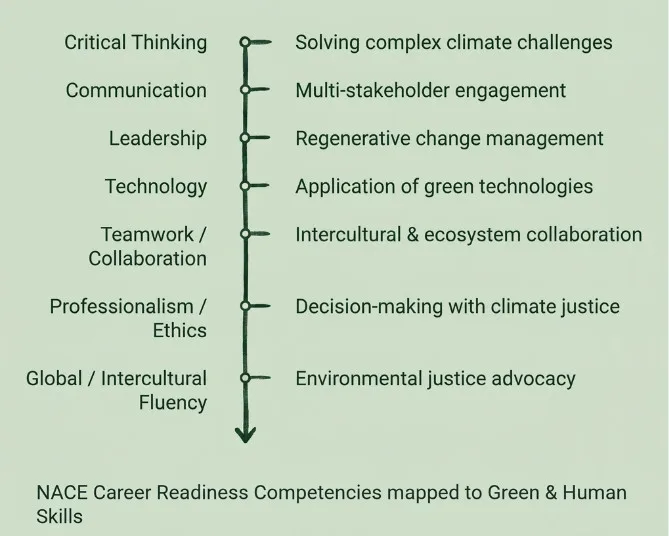
Career readiness refers to the competencies a person needs to successfully enter and navigate the world of work — whatever their field. The National Association of Colleges and Employers (NACE) defines eight core career readiness competencies: critical thinking, communication, teamwork, digital technology, leadership, professionalism, career management, and equity and inclusion.
At first glance, "green skills" and "career readiness" might seem like separate conversations. They are not. Increasingly, sustainability thinking is being embedded directly into NACE's framework — because employers across every sector are making it clear that they expect graduates to arrive with environmental awareness, not just technical qualifications.
The connection works in both directions. When you develop green skills through hands-on experience — say, monitoring sea turtle nests, coordinating with local park staff, and reporting findings to an NGO — you are simultaneously building critical thinking, communication, teamwork, and leadership. Green experience is not a detour from career readiness. Done well, it is career readiness.
Green skills are not just for "green jobs." The transformation is already underway across sectors that might seem unrelated to the environment. There are broadly three types of roles to be aware of:
are jobs that did not exist — or were rare — before the green transition began. Examples include renewable energy engineers (wind, solar, and hydro power), sustainability analysts, circular economy consultants, and environmental data scientists. These roles demand deep technical green skills combined with strong monitoring and analytical capabilities.
are existing jobs whose requirements are being rewritten by environmental expectations. Architects now need to design for energy efficiency and renewable materials. Farmers are being asked to shift toward low-carbon and regenerative agriculture. Financial analysts must assess climate risk. IT professionals need to account for the energy footprint of digital infrastructure. These roles require the softer green skills — long-term thinking, information literacy, systems understanding — at least as much as technical expertise.
are the administrative, communications, policy, and community roles that make the broader green transformation possible. Environmental educators, sustainability communications officers, green procurement managers, and national park administrators all sit in this category. The volunteer experience at the Galápagos National Park is directly relevant here: the skills developed — field monitoring, public engagement, multi-stakeholder coordination — map directly onto roles in conservation management and sustainable tourism.
The most employable candidates in the coming decade will not necessarily be those with the most narrowly specialised green credential. They will be people who can bring green thinking into any role — and who can demonstrate they have done so, in a real context, with real stakes.
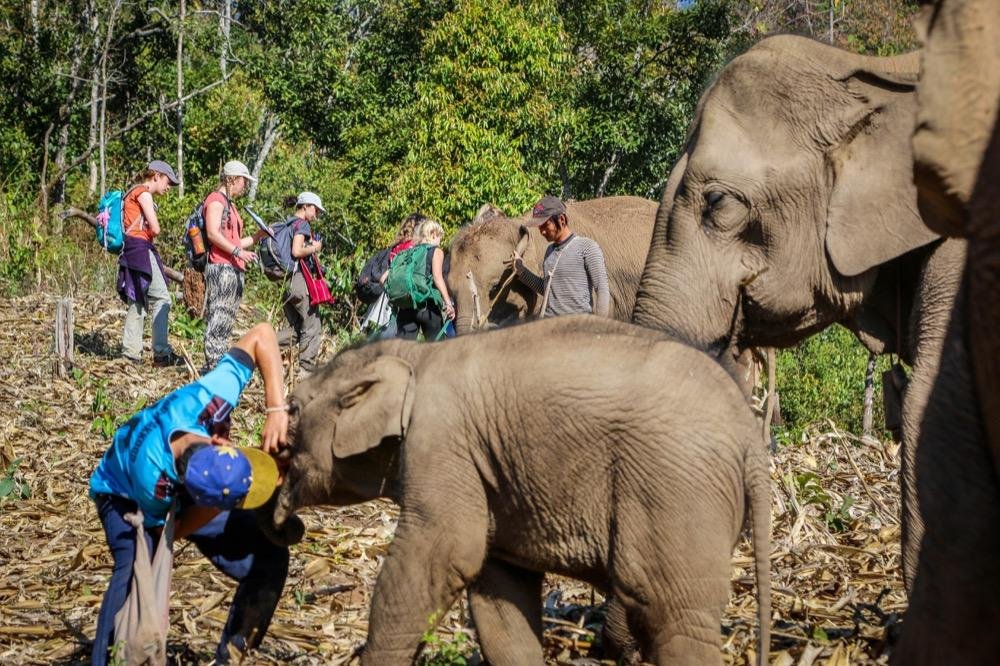
This internship has enabled me to develop my personal knowledge. By interacting with local communities, I have also acquired a number of professional exchange skills.
I was able to gain a practical understanding of the challenges of conservation and cohabitation between man and wildlife, while actively contributing to concrete initiatives in the field.
This internship has been a transformative experience, giving me a unique perspective on the challenges and opportunities of nature conservation and community engagement.
Career readiness skills go beyond knowing facts or theories. These skills enable students to apply knowledge in real-world situations, communicate effectively and work in a team.
Global citizenship is a sense of belonging to a broader community. If a person understands they are a part of a bigger whole, a part of a broader community, and acts to make a positive contribution to the community, then they can be considered a global citizen.