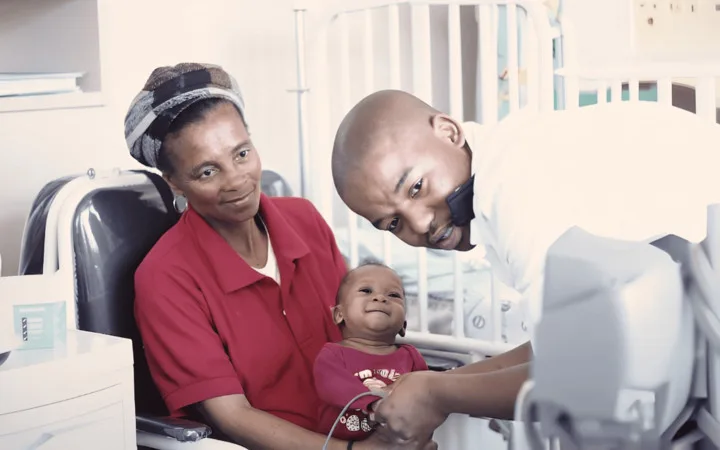
Complete your medical elective in Cape Town at Victoria Hospital, one of the city’s most active district hospitals and a teaching institution of the University of Cape Town (UCT). This programme places final-year medical students directly within clinical teams, giving you genuine hands-on exposure to a high-volume, socio-economically diverse patient population in the Western Cape public health system.
Available in General Surgery, Internal Medicine, Paediatrics, Orthopaedics, Emergency Medicine, and Nursing, this medical elective in South Africa is designed for students who want more than observation — you participate in ward rounds, patient admissions, theatre sessions, outpatient clinics, and emergency cases alongside qualified specialists. All students are automatically enrolled at UCT and receive a university student ID for the duration of their placement.
Nursing elective placements are open to nursing students and medical students at any year of study. Clinical elective placements in the medical and surgical departments are reserved for students in the second-to-last or final year of their medical degree.

Victoria Hospital is a 203-bed district hospital located in Wynberg, in the southern suburbs of Cape Town. Part of the Western Cape Province public healthcare system, it provides secondary-level medical care to a large and socio-economically diverse population, treating approximately 100,000 patients of all ages each year.
As a district hospital, Victoria Hospital covers a broad range of general medical and surgical services: inpatient care, outpatient clinics, emergency services, maternity care, diagnostic services and rehabilitation. The emergency department alone treats approximately 3,000 patients per month — including an average of two resuscitations per day. Cases range from non-communicable diseases such as diabetes, stroke, and heart disease to infectious conditions including pneumonia and HIV, as well as acute trauma and surgical emergencies.
Victoria Hospital has an established relationship with the University of Cape Town Faculty of Health Sciences and regularly hosts international medical students and interns for supervised clinical training. As a student on this programme, you are integrated into real clinical teams — not placed in a peripheral observation role.
The following five departments are available for medical elective placements in Cape Town and are open to students in the penultimate or final year of their medical degree. The Nursing department is open to nursing students and medical students at any year of study.
The nursing department provides patient care across all wards and clinical units of Victoria Hospital, including medical, surgical, paediatric and emergency services. Nursing staff are responsible for the continuous monitoring and care of patients, medication administration, wound care, infection control, and coordination with doctors and other healthcare professionals.
Students on a nursing elective in Cape Town work alongside the nursing team and gain direct insight into nursing practice within a public district hospital. Depending on the ward placement, students may observe and assist with patient care, basic clinical procedures, documentation, and ward management under the supervision of qualified nursing staff. This nursing elective in South Africa is open to students from any year of study who can communicate effectively in English.
The surgical department provides both elective and emergency surgical services, covering gastrointestinal (GIT) surgery and ENT (ear, nose and throat) procedures. Three operating theatres support a high volume of cases, including minimally invasive keyhole gastrointestinal surgery and ENT procedures that restore hearing for many patients.
During your surgery elective in South Africa, you join the surgical team during patient admissions, work in the outpatient department, and assist in the operating theatre. You are exposed to routine and emergency surgical cases that reflect the full complexity of district hospital surgery in a high-need urban population.
The Department of Medicine (VICDOM) diagnoses, treats and cares for approximately 6,000 to 8,000 patients each month across 72 inpatient beds and three ICU beds. The case mix reflects the full spectrum of urban South African public health: non-communicable diseases (heart attacks, diabetes, stroke) and infectious diseases (pneumonia, HIV), as well as a palliative care programme.
Students gain broad exposure to ward-based internal medicine during this clinical elective in South Africa, participating in patient admissions, ward rounds, outpatient clinics, and clinical problem-solving in a resource-challenged environment that demands practical diagnostic reasoning.
The Paediatrics Department manages 25 inpatient beds, daily outpatient clinics, and emergency paediatric admissions. The team — consisting of a paediatrician, four doctors and nursing staff — treats the full spectrum of childhood illness: respiratory infections, malnutrition, diarrhoeal diseases, and other infectious and non-communicable conditions.
The paediatric ward includes a mothers’ centre where mothers can stay overnight with hospitalised children. Your paediatrics elective in Cape Town places you within an active ward where clinical decision-making is fast-paced and the patient population reflects the socio-economic realities of the Western Cape.
The orthopaedic service covers fracture care, elective orthopaedic surgery, and emergency surgical procedures. Regular clinics include a Monday fracture clinic, a Thursday elective clinic, and a Friday spine and fracture clinic. The department works closely with specialists from Groote Schuur Hospital and Mitchell’s Plain Hospital, and maintains a strong collaboration with the physiotherapy department for patient rehabilitation.
Students on this orthopaedic elective in South Africa join the orthopaedic team across clinics, ward rounds, and surgical sessions, gaining exposure to trauma management and elective orthopaedic cases.
Victoria Hospital’s emergency department treats approximately 3,000 patients per month and performs an average of two resuscitations per day. The department handles a wide range of acute medical, surgical and social emergencies, relying on close teamwork between doctors, nurses and support staff to stabilise patients and direct them to the appropriate care pathway.
An emergency medicine elective in South Africa is one of the most sought-after placements for international medical students — and for good reason. The volume, variety, and acuity of cases at Victoria Hospital’s emergency centre offer clinical exposure that few equivalent programmes anywhere in the world can match. You observe patient stabilisation, triage, resuscitation, and inter-departmental coordination in real time.
Students are integrated into clinical teams and participate in daily hospital activities under supervision. The exact scope varies by department, but across all placements you can expect to be actively involved — not observing from a distance. Depending on your department and your year of study, you may:
All elective students at Victoria Hospital are automatically enrolled at the University of Cape Town and receive a UCT student ID that must be worn at the hospital at all times.
This medical elective in Cape Town is available for durations of 4 to 16 weeks. The programme runs year-round — there is no fixed academic calendar to align with. You choose the dates that best fit your medical school’s elective period.
Places are allocated on a first-come, first-served basis. Because Victoria Hospital is a popular elective destination and department availability can be limited, we strongly recommend applying 6 to 18 months in advance.
All students undertaking an elective at Victoria Hospital are automatically enrolled at the University of Cape Town Faculty of Health Sciences for the duration of their placement. You receive a UCT student ID, which you are required to wear at the hospital. This affiliation provides academic recognition and ensures your placement meets the institutional standards expected by most European and international medical schools.
Victoria Hospital is a 203-bed district hospital located in Wynberg, in the southern suburbs of Cape Town. Part of the Western Cape Province public healthcare system, it provides secondary-level medical care to a large and socio-economically diverse population, treating approximately 100,000 patients of all ages each year.
As a district hospital, Victoria Hospital covers a broad range of general medical and surgical services: inpatient care, outpatient clinics, emergency services, maternity care, diagnostic services and rehabilitation. The emergency department alone treats approximately 3,000 patients per month — including an average of two resuscitations per day. Cases range from non-communicable diseases such as diabetes, stroke, and heart disease to infectious conditions including pneumonia and HIV, as well as acute trauma and surgical emergencies.
Victoria Hospital has an established relationship with the University of Cape Town Faculty of Health Sciences and regularly hosts international medical students and interns for supervised clinical training. As a student on this programme, you are integrated into real clinical teams — not placed in a peripheral observation role.
The following five departments are available for medical elective placements in Cape Town and are open to students in the penultimate or final year of their medical degree. The Nursing department is open to nursing students and medical students at any year of study.
The nursing department provides patient care across all wards and clinical units of Victoria Hospital, including medical, surgical, paediatric and emergency services. Nursing staff are responsible for the continuous monitoring and care of patients, medication administration, wound care, infection control, and coordination with doctors and other healthcare professionals.
Students on a nursing elective in Cape Town work alongside the nursing team and gain direct insight into nursing practice within a public district hospital. Depending on the ward placement, students may observe and assist with patient care, basic clinical procedures, documentation, and ward management under the supervision of qualified nursing staff. This nursing elective in South Africa is open to students from any year of study who can communicate effectively in English.
The surgical department provides both elective and emergency surgical services, covering gastrointestinal (GIT) surgery and ENT (ear, nose and throat) procedures. Three operating theatres support a high volume of cases, including minimally invasive keyhole gastrointestinal surgery and ENT procedures that restore hearing for many patients.
During your surgery elective in South Africa, you join the surgical team during patient admissions, work in the outpatient department, and assist in the operating theatre. You are exposed to routine and emergency surgical cases that reflect the full complexity of district hospital surgery in a high-need urban population.
The Department of Medicine (VICDOM) diagnoses, treats and cares for approximately 6,000 to 8,000 patients each month across 72 inpatient beds and three ICU beds. The case mix reflects the full spectrum of urban South African public health: non-communicable diseases (heart attacks, diabetes, stroke) and infectious diseases (pneumonia, HIV), as well as a palliative care programme.
Students gain broad exposure to ward-based internal medicine during this clinical elective in South Africa, participating in patient admissions, ward rounds, outpatient clinics, and clinical problem-solving in a resource-challenged environment that demands practical diagnostic reasoning.
The Paediatrics Department manages 25 inpatient beds, daily outpatient clinics, and emergency paediatric admissions. The team — consisting of a paediatrician, four doctors and nursing staff — treats the full spectrum of childhood illness: respiratory infections, malnutrition, diarrhoeal diseases, and other infectious and non-communicable conditions.
The paediatric ward includes a mothers' centre where mothers can stay overnight with hospitalised children. Your paediatrics elective in Cape Town places you within an active ward where clinical decision-making is fast-paced and the patient population reflects the socio-economic realities of the Western Cape.
The orthopaedic service covers fracture care, elective orthopaedic surgery, and emergency surgical procedures. Regular clinics include a Monday fracture clinic, a Thursday elective clinic, and a Friday spine and fracture clinic. The department works closely with specialists from Groote Schuur Hospital and Mitchell's Plain Hospital, and maintains a strong collaboration with the physiotherapy department for patient rehabilitation.
Students on this orthopaedic elective in South Africa join the orthopaedic team across clinics, ward rounds, and surgical sessions, gaining exposure to trauma management and elective orthopaedic cases.
Victoria Hospital's emergency department treats approximately 3,000 patients per month and performs an average of two resuscitations per day. The department handles a wide range of acute medical, surgical and social emergencies, relying on close teamwork between doctors, nurses and support staff to stabilise patients and direct them to the appropriate care pathway.
An emergency medicine elective in South Africa is one of the most sought-after placements for international medical students — and for good reason. The volume, variety, and acuity of cases at Victoria Hospital's emergency centre offer clinical exposure that few equivalent programmes anywhere in the world can match. You observe patient stabilisation, triage, resuscitation, and inter-departmental coordination in real time.
Students are integrated into clinical teams and participate in daily hospital activities under supervision. The exact scope varies by department, but across all placements you can expect to be actively involved — not observing from a distance. Depending on your department and your year of study, you may:
All elective students at Victoria Hospital are automatically enrolled at the University of Cape Town and receive a UCT student ID that must be worn at the hospital at all times.
This medical elective in Cape Town is available for durations of 4 to 16 weeks. The programme runs year-round — there is no fixed academic calendar to align with. You choose the dates that best fit your medical school's elective period.
Places are allocated on a first-come, first-served basis. Because Victoria Hospital is a popular elective destination and department availability can be limited, we strongly recommend applying 6 to 18 months in advance.
All students undertaking an elective at Victoria Hospital are automatically enrolled at the University of Cape Town Faculty of Health Sciences for the duration of their placement. You receive a UCT student ID, which you are required to wear at the hospital. This affiliation provides academic recognition and ensures your placement meets the institutional standards expected by most European and international medical schools.
Your support in Cape Town is provided by Dawn Falken, our local coordinator. Dawn has been part of the Cape Town team since 2016 and knows the city, the hospital, and the practicalities of arriving as an international student inside out. She will meet you at the airport on arrival day, accompany you to Victoria Hospital on your first day, and remain your point of contact throughout your stay for anything you need, whether that is a practical question, a logistical challenge, or simply a recommendation for where to spend your weekend.
We are dedicated to this cause and offer our volunteers unforgettable experiences that often exceed their expectations!
Since 2009, we have been conducting volunteer and internship projects in South Africa.
This program is available for up to 12 weeks. Please contact us for rates and availability.
| Duration | Fees to be paid upon registration |
|---|---|
| 4 Weeks | 2865€ |
| 5 Weeks | 3580€ |
| 6 Weeks | 4295€ |
| 7 Weeks | 5010€ |
| 8 Weeks | 5725€ |
| 10 Weeks | 7155€ |
| 12 Weeks | 8495€ |
Housing is allocated by local NGOs, not by Freepackers - the descriptions are there to give you an idea of the type of accommodation, as it is very likely that conditions will vary on site depending on the number of volunteers, weather conditions, availability, etc. Each volunteer will be accommodated according to the stated conditions, but it is possible that the accommodation may not match the description or images shown on this site word for word, for example, in the case of annexed housing, renovations, relocations, etc.
Accommodation for participants on the medical elective programme in Cape Town is available at the Muizenberg Hostel, a friendly and relaxed hostel located in the seaside suburb of Muizenberg. The hostel has comfortable communal spaces where guests socialise, a shared kitchen, and easy access to cafés, small shops, and public transport. The atmosphere is informal and community-oriented, participants from different countries regularly connect and share their experiences here.
Rooms are available in a 6-bed mixed dormitory or an 8-bed female-only dormitory, subject to availability and preference. The rate includes breakfast. You can choose between a cooked breakfast or cereals with fruit.
The commute from the Muizenberg Hostel to Victoria Hospital takes approximately 20 minutes by public train. The Metrorail service runs directly from Muizenberg station to Wynberg station (one stop), at a cost of R12 (approximately 0.60 EUR) one way, making it one of the most affordable daily commutes of any medical elective destination in the world.
The program fee includes breakfast. You can choose between a hot breakfast or cereal with fruit.
Other meals can be prepared in the hostel's fully equipped kitchen or enjoyed at one of the nearby cafés and restaurants.
Muizenberg is home to Cape Town's most famous beach. The long stretch of sandy shoreline is lined with the colourful beach huts that have made it an iconic image of the Cape. The waves are gentle and the slope gradual, making it one of the safest and most popular places in South Africa to learn surfing. The beachfront area offers cafés, surf shops, and a relaxed coastal atmosphere — a genuine antidote to hospital shifts.
This programme is open to medical and nursing students aged 18 and above who can communicate effectively in English.
Clinical elective placements in General Surgery, Internal Medicine, Paediatrics, Orthopaedics, and Emergency Medicine are available to medical students in the second-to-last or final year of their degree. The Nursing department is open to medical students and nursing students at any year of study.
Yes. Nursing elective placements at Victoria Hospital are open to nursing students at any year of their nursing studies, as well as to medical students at any year of their medical studies.
Yes. Victoria Hospital is a teaching institution of the University of Cape Town Faculty of Health Sciences. All students undertaking an elective are automatically enrolled at UCT and receive a UCT student ID for the duration of their placement.
Yes. All students are required to provide proof of Hepatitis B vaccination before the start of their placement. This is a hospital requirement and cannot be waived.
There is no fixed deadline, but places are allocated on a first-come, first-served basis. We recommend applying 6 to 18 months in advance, especially for high-demand departments such as Emergency Medicine and General Surgery.
Yes. You can indicate your preferred department(s) at the time of enquiry. Splits across departments during a single placement may be possible depending on availability and the duration of your elective.
Students must be able to communicate effectively in English. Victoria Hospital operates in English and all clinical supervision, ward rounds, and patient interactions take place in English.
Cape Town is a vibrant international city, and thousands of international students visit each year for electives and university programmes. Like any large city, it requires common-sense awareness: avoid walking alone at night in unfamiliar areas, keep valuables secure, and use Uber or Bolt rather than walking late at night. The southern suburbs — including Wynberg and Muizenberg — are well-established student areas. Our team provides a full safety briefing on arrival and is available 24/7 throughout your stay.
In addition to the mandatory Hepatitis B vaccination, the following are commonly recommended for South Africa (check current advice with your GP or travel health clinic): Hepatitis A, typhoid, tetanus/diphtheria/polio, and MMR. Malaria prophylaxis is not required for Cape Town. Yellow fever vaccination is required only if you are travelling from a yellow fever-endemic country. Always consult a travel health professional before departure.
Please contact the embassy or immigration website of the country you wish to enter.
You can find all ressources on the World Organization Website, in the Travel Advice section A vaccine vial.
For all international projects, Realstep requires participants to take out travel insurance covering accidents, illness, and repatriation, as well as civil liability for professional activities abroad.
For complete protection while studying or interning abroad, you can take out Cap Student insurance online by following this link Student insurance abroad | Chapka Assurances, which will give you a 5% discount.
If you take out another insurance policy, we will ask you to send us a copy of your certificate in English.
Achieve the language level required for your international project with tailored support. The Clic-campus method Free Packers X Clic Campus foreign language training courses combines videoconference lessons and an innovative e-learning platform, offering complete flexibility from the comfort of your own home.
Yes, many students have validated their internship through Real Step projects. Our placements meet schools’ academic requirements.
Yes, many students have validated their internship through Real Step projects. Our placements meet schools’ academic requirements.
We offer many internships in a wide range of areas, such as:
Yes. You can take English or Spanish courses before you leave, or even during your project.
Course schedules are flexible depending on your goal. You can choose to take a few hours per week, or fully focus on your language courses over a longer period to prepare for a project such as a WHV or a job abroad.
Yes, many students have validated their internship through Real Step projects. Our placements meet schools’ academic requirements.
Yes, many students have validated their internship through Real Step projects. Our placements meet schools’ academic requirements.
We offer many internships in a wide range of areas, such as:
Yes. You can take English or Spanish courses before you leave, or even during your project.
Course schedules are flexible depending on your goal. You can choose to take a few hours per week, or fully focus on your language courses over a longer period to prepare for a project such as a WHV or a job abroad.