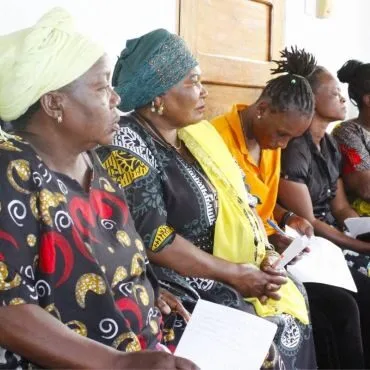
Contribute to numerous humanitarian projects in Tanzania in the Kilimanjaro region. You will support local communities and NGOs in sectors such as marketing, communication, or even microfinance.
The projects aim to support essential causes such as human rights, women’s empowerment, child protection, and the economic development of local communities.
These missions are intended for people wishing to gain practical experience in humanitarian work, project management, social work, finance, microfinance, marketing, communication, or law, while making a useful and concrete contribution within local communities.
In this program, you can choose to complete your internship in one of the projects presented. You can join various organizations and NGOs working closely with local communities.
The roles offered are diverse: participation in awareness workshops, creation of educational content, involvement in documentation and communication, administrative and financial support, project analysis, or assistance with entrepreneurial development.
You will be supervised by professionals within your host organizations. The tasks assigned to you depend on your skills and interests.
You can consult the brochure to learn more about each project.
In this program, you will work for NGOs that provide legal support to women, children, people with disabilities, and other minorities.
These individuals face discrimination in areas such as labor law, family law, criminal law, or business law. The goal of these organizations is to inform them of their rights and provide them with free legal assistance.
As an intern, you will analyze data, write reports on legal topics, and accompany the organization during its field missions.
Missions may vary depending on your interests and skills. Your tasks may include:
Working hours are generally Monday to Friday, from 8:30 a.m. to 5:00 p.m.
As an intern in this program, you will support one of our partner organizations in communication, administrative management, project development, fundraising, and documentation.
You may contribute in very different ways depending on your motivation and skills. Your missions may include:
During your internship, you will support women’s empowerment and marginalized groups by joining NGOs committed to economic autonomy, gender equality, women’s rights, violence prevention, social inclusion, and education.
Many people in Tanzania do not have access to small loans from banks due to insufficient guarantees. This is one of the greatest obstacles to development in the region.
Microfinance helps support local initiatives for individuals with very limited financial resources. These people can then launch entrepreneurial activities or finance their children’s education.
You will learn in detail how this sector works by joining a local NGO and carrying out the following missions:
Assisting during training sessions, workshops, and information meetings (business management, business planning, accounting)
Supporting the development of strategies for the groups
Evaluating small businesses
Participating in marketing activities
Loan analysis and credit repayment monitoring
Carrying out administrative tasks
Contributing to project planning
Ensuring customer service and member support
As an intern, you must:
The partner NGO’s ambition is to build a better Africa through community and environmental projects that allow you to provide support to those who truly need it.
We are fully dedicated to this cause and offer our volunteers unforgettable experiences that often exceed their expectations!
This program is available up to 24 weeks, contact us to know price and availability.
Housing is allocated by local NGOs, not by Freepackers - the descriptions are there to give you an idea of the type of accommodation, as it is very likely that conditions will vary on site depending on the number of volunteers, weather conditions, availability, etc. Each volunteer will be accommodated according to the stated conditions, but it is possible that the accommodation may not match the description or images shown on this site word for word, for example, in the case of annexed housing, renovations, relocations, etc.
Accommodation in shared residence
The accommodation offered is in a shared residence with other international students. You will stay in a dormitory-style room with 4 participants per room. It is possible to have a private room (double or twin) depending on availability and for an additional fee. Each room has its own bathroom, and you will have access to a shared kitchen to prepare your meals. Meals are not included, but a half-board option can be added depending on the residence.
The residences are located in pleasant neighborhoods of Moshi, close to public transportation and shops.
Another option – Homestay accommodation
For the more adventurous, it is possible to stay with a host family, with half-board included. These families can host up to two students at a time. Availability is limited, and some families may live farther from the internship location.
The price differs from that of the shared residences – please contact us for more details.
Meals are not included, but a kitchen is available for you to prepare your own meals.
Moshi is a town in northern Tanzania, at the foot of Mount Kilimanjaro. Here, you are in the heart of Africa and encounter people such as the Chagga and the Maasai. The town has about 150,000 inhabitants; however, it appears—like many African cities—much smaller due to the fact that many unplanned settlements are spread over long distances outside the town. In addition, the majority of the population does not have the purchasing power that would make transactions comparable to those of a European city of this size, for example. Nevertheless, Moshi is a relatively well-developed town and all necessities can be found here, from ATMs to specialty shops, restaurants, and small supermarkets.
Moshi is the starting point for all climbs of Mount Kilimanjaro, and many safaris to the national parks of northern Tanzania depart from here. Kilimanjaro International Airport is located about 40 km from Moshi. Tourism and the trade of coffee and bananas have contributed to the city's growth.
The town is situated at an altitude of 813 m and enjoys year-round weather that people living in moderate climates consider very comfortable (compared to the hot and humid conditions often found on the coast or on the islands).
HIV and AIDS are the most significant issues, with estimates suggesting that up to 16% of the population is HIV positive. The resulting problems include countless orphans and street children, neglected elderly people, and sick individuals whom no one can care for due to a lack of financial means. Other issues are linked to poverty, lack of access to education, healthcare, infrastructure, and the destruction of environmental resources such as deforestation.
You can find all ressources on the World Organization Website, in the Travel Advice section A vaccine vial.
For all international projects, Realstep requires participants to take out travel insurance covering accidents, illness, and repatriation, as well as civil liability for professional activities abroad.
For complete protection while studying or interning abroad, you can take out Cap Student insurance online by following this link Student insurance abroad | Chapka Assurances, which will give you a 5% discount.
If you take out another insurance policy, we will ask you to send us a copy of your certificate in English.
Achieve the language level required for your international project with tailored support. The Clic-campus method Free Packers X Clic Campus foreign language training courses combines videoconference lessons and an innovative e-learning platform, offering complete flexibility from the comfort of your own home.
Here are the essential mandatory steps to complete:
Other steps may be necessary depending on the type of internship, the country, or other factors.
Our team will provide you with all the information you need.
Yes, many students have validated their internship through Real Step projects. Our placements meet schools’ academic requirements.
Yes. You can take English or Spanish courses before you leave, or even during your project.
Course schedules are flexible depending on your goal. You can choose to take a few hours per week, or fully focus on your language courses over a longer period to prepare for a project such as a WHV or a job abroad.