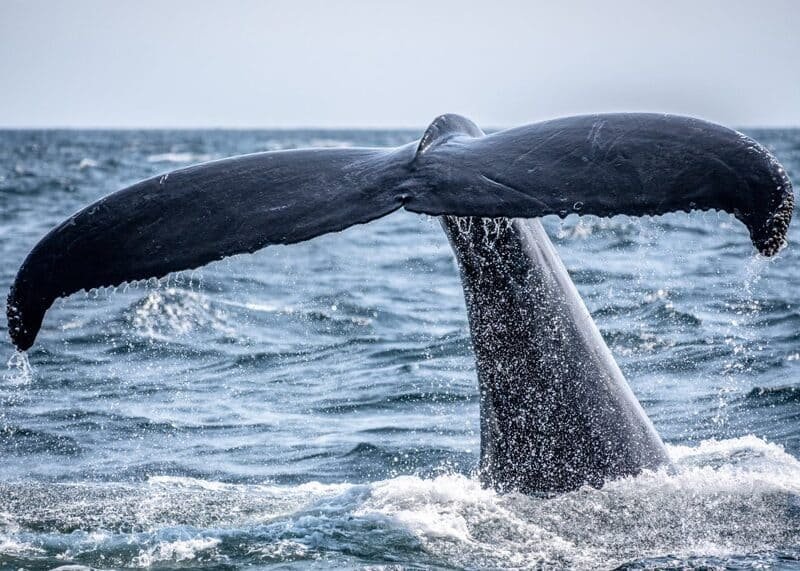
The Algarve coastline is home to one of Portugal’s richest marine environments — yet one that remains poorly documented. Common dolphins, bottlenose dolphins, transient orcas, whales: the Atlantic face of the Iberian Peninsula hosts remarkable biodiversity that is the subject of long-term scientific monitoring. By joining this marine biology internship, you become part of the field research team and contribute to filling a real gap in data on the region’s marine wildlife.
This programme is run by a social enterprise based in Portugal specialising in environmental impact volunteering. To date, over 4,300 participants from 70 nationalities have contributed to its conservation projects.


Monitoring cetaceans and coastal marine wildlife is a demanding discipline, highly dependent on weather conditions and human availability. Permanent research teams are small, and the continuity of observations — a non-negotiable requirement for reliable scientific data — cannot be guaranteed without the support of motivated participants.
Several structural challenges affect marine conservation in the Algarve:
The distribution of dolphins and whales off southern Portugal remains insufficiently documented. Every field trip, every recorded sighting, every noted behaviour represents a valuable data point that directly feeds into conservation studies.
By joining this internship, you help ensure scientific monitoring continues regardless of the season. You are not here as an observer: you work alongside experienced marine biologists, collect real data and contribute to a deeper understanding of Portugal’s marine ecosystems.
Cetaceans are apex predators — their presence or absence is a direct indicator of the health of the entire marine food chain. Protecting these species means protecting the whole coastal ecosystem of the Algarve. And beyond that: oceans produce half the oxygen we breathe and absorb 25% of global CO₂ emissions.
Your programme alternates between fieldwork activities and theoretical sessions, designed to give you real, hands-on progression in marine biology research methods.
You take part in land-based and boat-based observation sessions — from clifftops or aboard a research vessel — in real Atlantic conditions. You learn to identify species, interpret their behaviours and manage the constraints of fieldwork in variable ocean conditions.
You assist the research team in recording observations: behaviours, GPS positions, photographs for individual identification. This data directly feeds into ongoing studies on Portugal’s marine environment.
At the end of each field day, you enter the collected data into dedicated databases. You learn to work with GPS information, photo-identification methods and archiving protocols specific to marine research.
You assist with ongoing scientific projects under direct supervision from marine biologists: document analysis, image processing, and specific fieldwork tasks depending on the season.
Regular sessions cover Mediterranean and Atlantic marine fauna, cetacean monitoring methodologies, marine conservation issues and the threats facing Portugal’s and the Algarve’s marine ecosystem.
This programme is designed to be accessible. No scientific degree is required — what matters most is your motivation and your ability to invest yourself physically and intellectually in fieldwork.
Yes. This programme regularly welcomes students from engineering schools — in environmental engineering, applied ecology, marine sciences or natural resource management. If you are looking for an engineering internship in Portugal to validate a professional or laboratory placement, this programme may fit that framework: it combines field data collection, scientific analysis and collaborative research. We recommend checking with your institution that the programme qualifies for an internship agreement before applying.
Monitoring cetaceans and coastal marine wildlife is a demanding discipline, highly dependent on weather conditions and human availability. Permanent research teams are small, and the continuity of observations — a non-negotiable requirement for reliable scientific data — cannot be guaranteed without the support of motivated participants.
Several structural challenges affect marine conservation in the Algarve:
The distribution of dolphins and whales off southern Portugal remains insufficiently documented. Every field trip, every recorded sighting, every noted behaviour represents a valuable data point that directly feeds into conservation studies.
By joining this internship, you help ensure scientific monitoring continues regardless of the season. You are not here as an observer: you work alongside experienced marine biologists, collect real data and contribute to a deeper understanding of Portugal's marine ecosystems.
Cetaceans are apex predators — their presence or absence is a direct indicator of the health of the entire marine food chain. Protecting these species means protecting the whole coastal ecosystem of the Algarve. And beyond that: oceans produce half the oxygen we breathe and absorb 25% of global CO₂ emissions.
Your programme alternates between fieldwork activities and theoretical sessions, designed to give you real, hands-on progression in marine biology research methods.
You take part in land-based and boat-based observation sessions — from clifftops or aboard a research vessel — in real Atlantic conditions. You learn to identify species, interpret their behaviours and manage the constraints of fieldwork in variable ocean conditions.
You assist the research team in recording observations: behaviours, GPS positions, photographs for individual identification. This data directly feeds into ongoing studies on Portugal's marine environment.
At the end of each field day, you enter the collected data into dedicated databases. You learn to work with GPS information, photo-identification methods and archiving protocols specific to marine research.
You assist with ongoing scientific projects under direct supervision from marine biologists: document analysis, image processing, and specific fieldwork tasks depending on the season.
Regular sessions cover Mediterranean and Atlantic marine fauna, cetacean monitoring methodologies, marine conservation issues and the threats facing Portugal's and the Algarve's marine ecosystem.
This programme is designed to be accessible. No scientific degree is required — what matters most is your motivation and your ability to invest yourself physically and intellectually in fieldwork.
Yes. This programme regularly welcomes students from engineering schools — in environmental engineering, applied ecology, marine sciences or natural resource management. If you are looking for an engineering internship in Portugal to validate a professional or laboratory placement, this programme may fit that framework: it combines field data collection, scientific analysis and collaborative research. We recommend checking with your institution that the programme qualifies for an internship agreement before applying.
Founded in 1997, our partner organization has received over 200,000 participants on humanitarian and sustainable projects around the world. With a seat on the United Nations International Commission on Sustainable Tourism, all their actions are carried out in collaboration with communities and local authorities.
Founded in 1997, our partner organization has received over 200,000 participants on humanitarian and sustainable projects around the world. With a seat on the United Nations International Commission on Sustainable Tourism, all their actions are carried out in collaboration with communities and local authorities.
This program is available for up to 24 weeks, Please contact us for rates and availability.
| Duration | Fees to be paid upon registration |
|---|---|
| 2 Weeks | 2195€ |
| 4 Weeks | 3345€ |
| 6 Weeks | 4445€ |
| 8 Weeks | 5195€ |
| 10 Weeks | 5995€ |
| 12 Weeks | 6845€ |
Housing is allocated by local NGOs, not by Freepackers - the descriptions are there to give you an idea of the type of accommodation, as it is very likely that conditions will vary on site depending on the number of volunteers, weather conditions, availability, etc. Each volunteer will be accommodated according to the stated conditions, but it is possible that the accommodation may not match the description or images shown on this site word for word, for example, in the case of annexed housing, renovations, relocations, etc.
You stay on-site at the field station in the Algarve. Rooms are shared (mixed), with communal bathroom facilities. This accommodation format is designed to foster team integration and full immersion in the routine of the marine research project.
Full board accommodation: Shared accommodation at the research field station in the Algarve, all meals included (breakfast, lunch and dinner). Specific dietary requirements (allergies, intolerances, vegetarian preferences) are accommodated.
The internship takes place in the Algarve, southern Portugal — one of Europe's most preserved Atlantic coastlines and a prime study site for Portugal's marine environment.
Climate :
Pleasant, expect temperatures between 18 and 24C on average between December and February, and 24 to 28C between June and August.
The easiest option is to fly into Faro Airport. From there, you can either:
The local team will welcome you at the project and will run an orientation session on the first day. You will meet the other volunteers and get to know the project surroundings.
Please contact the embassy or immigration website of the country you wish to enter.
You can find all ressources on the World Organization Website, in the Travel Advice section A vaccine vial.
For all international projects, Realstep requires participants to take out travel insurance covering accidents, illness, and repatriation, as well as civil liability for professional activities abroad.
For complete protection while studying or interning abroad, you can take out Cap Student insurance online by following this link Student insurance abroad | Chapka Assurances, which will give you a 5% discount.
If you take out another insurance policy, we will ask you to send us a copy of your certificate in English.
Achieve the language level required for your international project with tailored support. The Clic-campus method Free Packers X Clic Campus foreign language training courses combines videoconference lessons and an innovative e-learning platform, offering complete flexibility from the comfort of your own home.
A wide range of internships is available, and our programs are suitable for many engineering fields, such as:
Feel free to contact us to learn about all our internship opportunities.
See our Ultimate Guide to Succeeding in Your Engineering Internship.
This can vary depending on your school and your year of study, but in general you can go for 4 to 16 weeks.
Three months is often the duration required by schools to help you develop skills. To learn more about 3-month engineering internships.
A wide range of internships is available, and our programs are suitable for many engineering fields, such as:
Feel free to contact us to learn about all our internship opportunities.
See our Ultimate Guide to Succeeding in Your Engineering Internship.
This can vary depending on your school and your year of study, but in general you can go for 4 to 16 weeks.
Three months is often the duration required by schools to help you develop skills. To learn more about 3-month engineering internships.