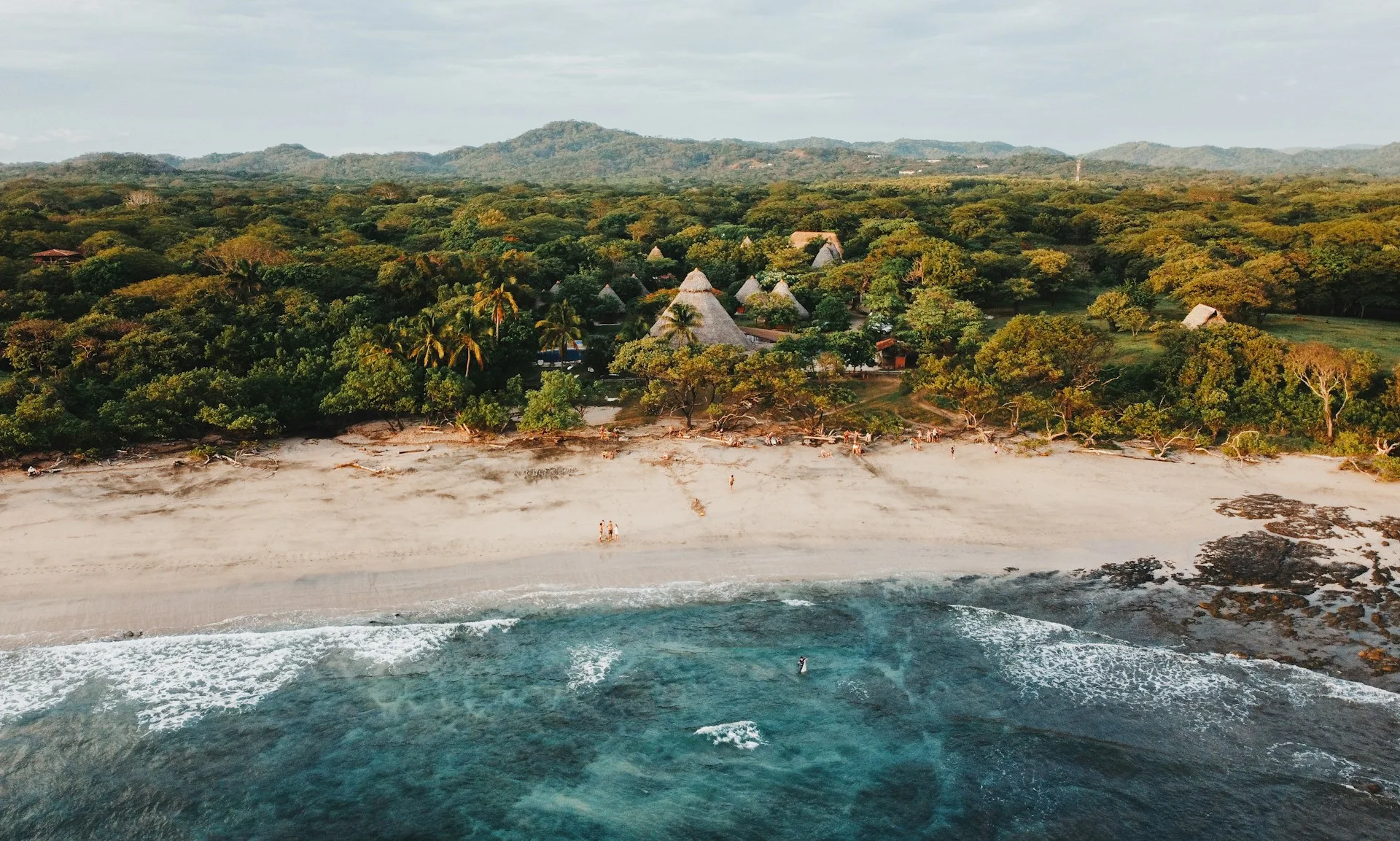
Join Costa Rica to take part in this environmental protection project through 3 missions : marine turtle conservation, permaculture, and reforestation.
Students seeking an internship in the environmental field will benefit from a valuable learning experience alongside experienced professionals who will guide them throughout the project.
Actively contribute to the protection of endangered species with this environmental internship in Costa Rica. You can get involved in three different projects depending on your interests and skills:
In this project, the objective is to contribute to reforestation through concrete field actions. You will take part in:
This project aims to give you the opportunity to gain experience in organic food production through hands-on, concrete, and sustainable actions in the field. Your tasks, without being limited to, include:
From June to February, during the nesting season, you will help protect turtles along the beaches of Playa Ario. Your missions include:
It is also possible to work alongside local families on beach clean-ups, recycling projects, and community initiatives aimed at raising awareness of environmental protection.
You will work 5 days per week, with 2 days off to rest and explore the surrounding area.
Supervision
Throughout the internship, participants will benefit from direct supervision by an experienced professional with expertise in supervising national and international interns in various fields of conservation and research. This guarantees technical guidance, continuous follow-up, and validation of academic processes and results.
In addition, activities and tasks may be adjusted according to on-site needs.
It is recommended that interns complete a minimum mission of 3 months, as periods of less than one month do not allow for the development of solid research processes or the achievement of meaningful results.
Internship or volunteering
For these three projects, it is possible to undertake either an internship or a volunteering mission depending on your level of experience.
Volunteering focuses more on hands-on field experience and support for conservation projects, while the internship involves a higher level of responsibility. Interns are generally required to lead or develop a specific project or program as part of their academic requirements, whether at undergraduate, master’s, or research level.
The partner NGO offers numerous projects with a positive impact, aimed at creating immersive and authentic experiences. Their goal is to foster a better understanding of cultures and promote respect through these sustainable projects.
This program is available for up to 24 weeks. The prices apply to the permaculture program; please contact us to find out the prices for the other programs.
Housing is allocated by local NGOs, not by Freepackers - the descriptions are there to give you an idea of the type of accommodation, as it is very likely that conditions will vary on site depending on the number of volunteers, weather conditions, availability, etc. Each volunteer will be accommodated according to the stated conditions, but it is possible that the accommodation may not match the description or images shown on this site word for word, for example, in the case of annexed housing, renovations, relocations, etc.
You are accommodated in shared housing, in dormitory-style rooms with other project participants. Showers are shared. Common areas are available for meals and social time. Wi-Fi access is limited.
The accommodation is located in an area between the forest and the sea, and animals can often be seen near the campsite (birds, monkeys, iguanas...).
Three meals per day included. Meals are freshly prepared, mainly vegetarian, and often made with local products.
Upon your arrival, you will be welcomed at San José airport on Saturday and transferred to your accommodation for one night. The following day, Sunday, you will receive all the necessary instructions to reach the bus station, where you will take a public bus to the project (approximately a 5-hour journey). Upon arrival, the local team will welcome you and provide an orientation session.
Playa Ario, where the project is located, lies within the Caletas–Ario National Wildlife Refuge, a protected area that is home to nesting marine turtles, coastal forests, mangroves, and an incredible diversity of wildlife. The Nicoya Peninsula is one of the most spectacular and ecologically rich regions of Costa Rica.
Average temperatures range between 24°C and 32°C throughout the year, making the region ideal for outdoor work and exploration. Volunteers should be prepared for a hot and humid climate and bring clothing suitable for both sunshine and rain.
You can find all ressources on the World Organization Website, in the Travel Advice section A vaccine vial.
For all international projects, Realstep requires participants to take out travel insurance covering accidents, illness, and repatriation, as well as civil liability for professional activities abroad.
For complete protection while studying or interning abroad, you can take out Cap Student insurance online by following this link Student insurance abroad | Chapka Assurances, which will give you a 5% discount.
If you take out another insurance policy, we will ask you to send us a copy of your certificate in English.
Achieve the language level required for your international project with tailored support. The Clic-campus method Free Packers X Clic Campus foreign language training courses combines videoconference lessons and an innovative e-learning platform, offering complete flexibility from the comfort of your own home.
Here are the essential mandatory steps to complete:
Other steps may be necessary depending on the type of internship, the country, or other factors.
Our team will provide you with all the information you need.
Yes, many students have validated their internship through Real Step projects. Our placements meet schools’ academic requirements.
Yes. You can take English or Spanish courses before you leave, or even during your project.
Course schedules are flexible depending on your goal. You can choose to take a few hours per week, or fully focus on your language courses over a longer period to prepare for a project such as a WHV or a job abroad.